$5.53
INTRODUCTORY LAUNCH PRICE FOR A LIMITED TIME
PIP diary for fluctuating conditions
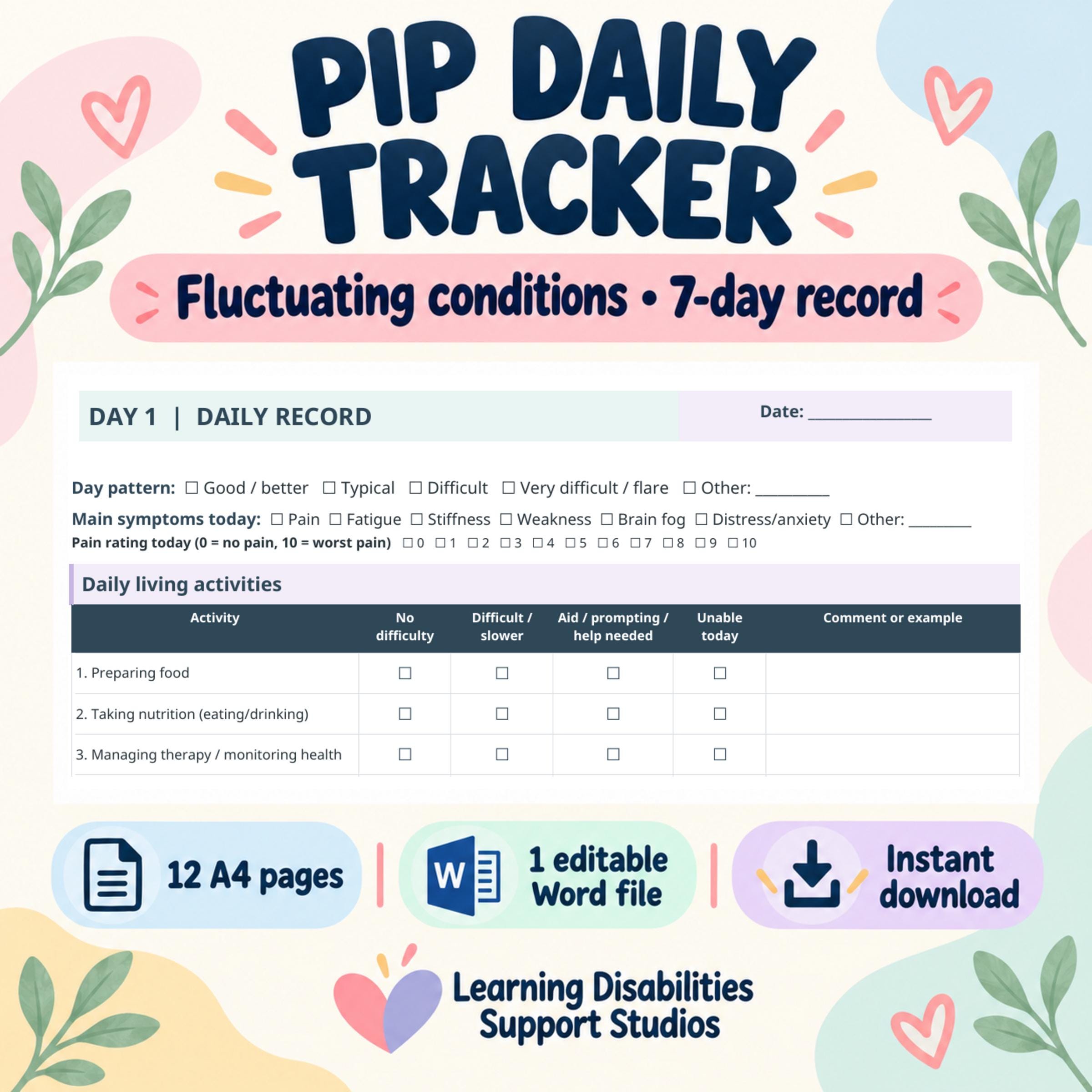
Record how your condition affects everyday activities, including better days, difficult days and the help or recovery time you need. This editable seven-day tracker gives you a practical place to keep real examples together when preparing information about Personal Independence Payment (PIP).
What you receive
One instant digital download: PIP-7-Day-Tracker.docx — a 12-page, editable A4 Microsoft Word template.
• Cover page.
• How-to-use guidance, including prompts about safety, doing activities again, the standard achieved and the time taken.
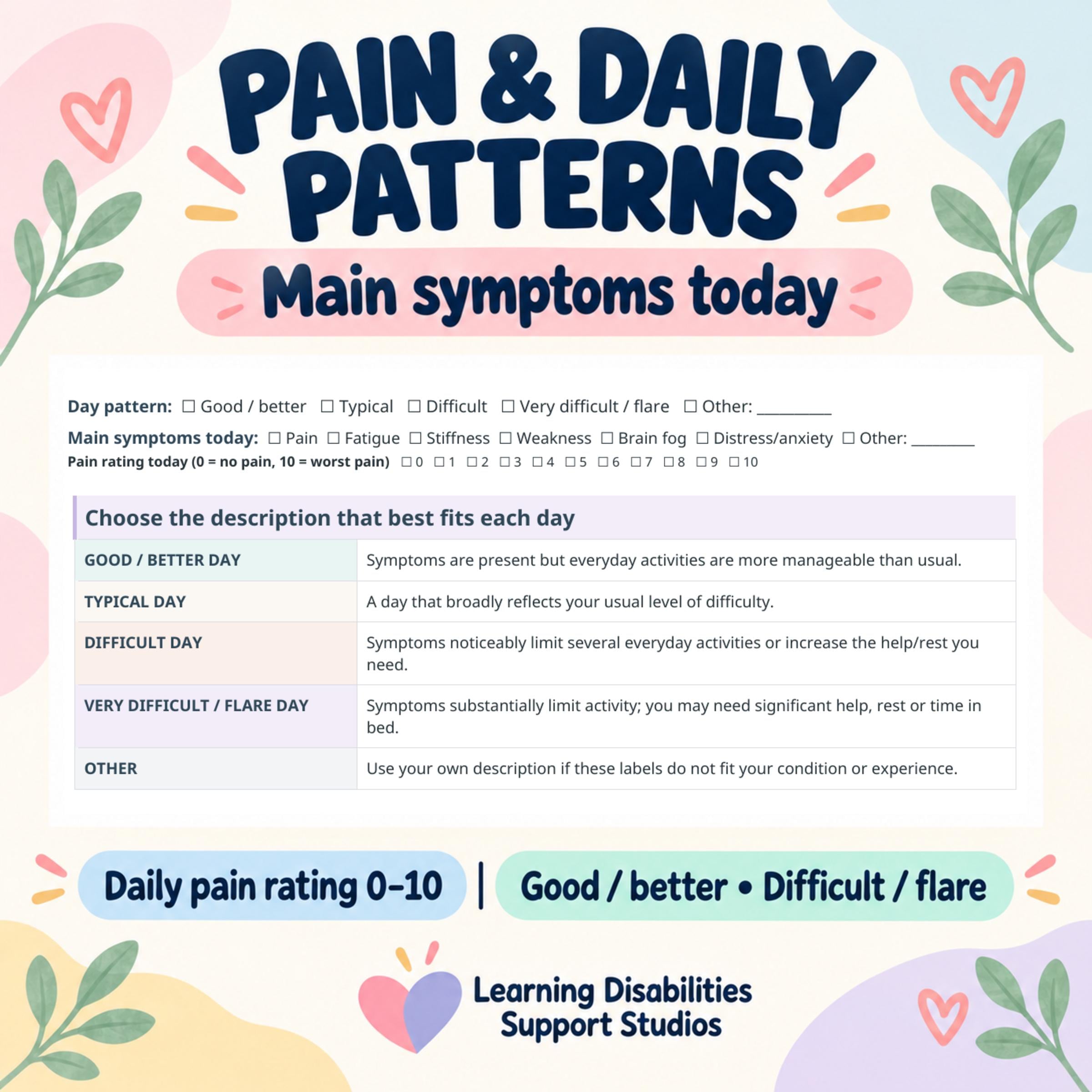
• A before-you-start page for the week, with descriptions of different day patterns.
• Seven daily record pages — one for each day.
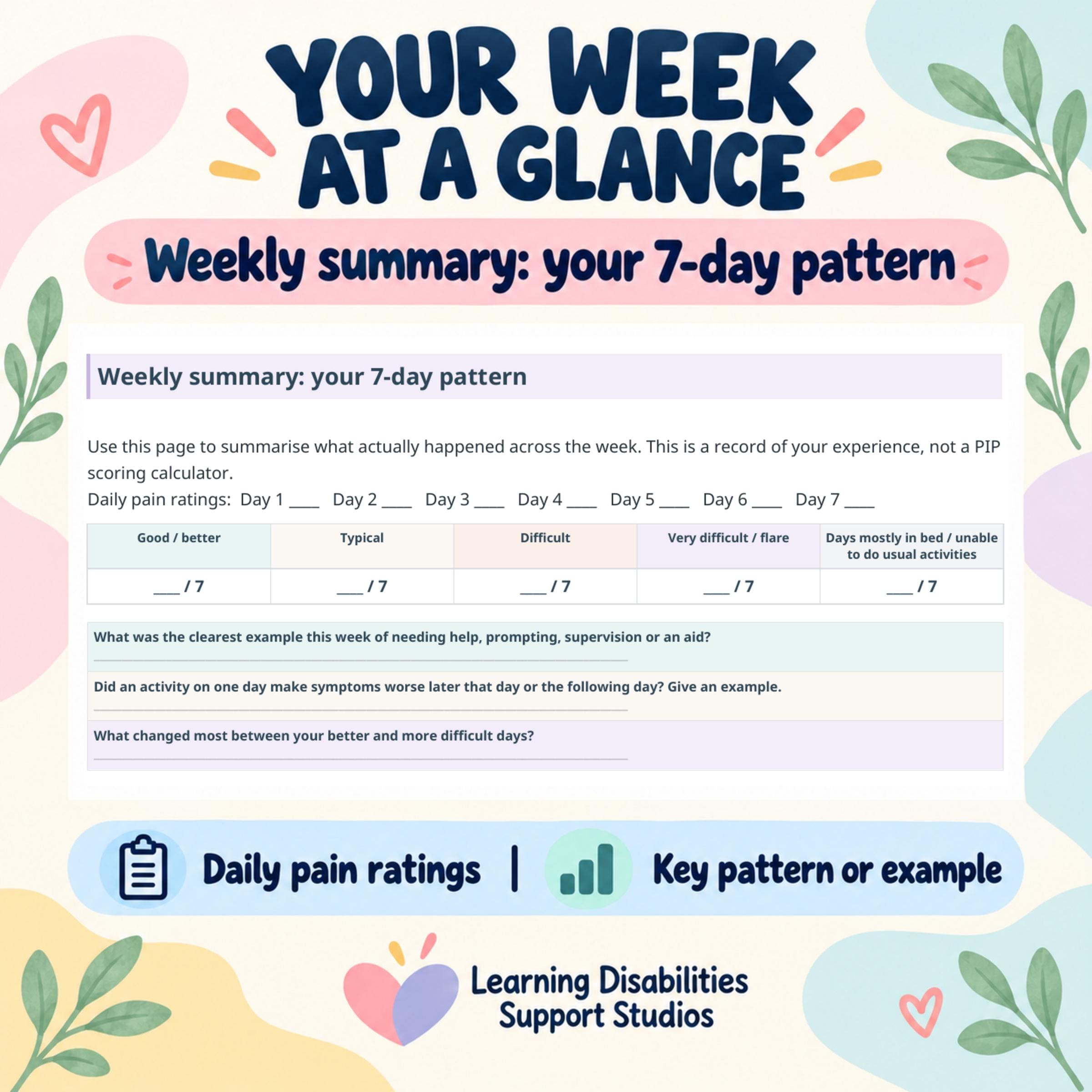
• A weekly summary page.
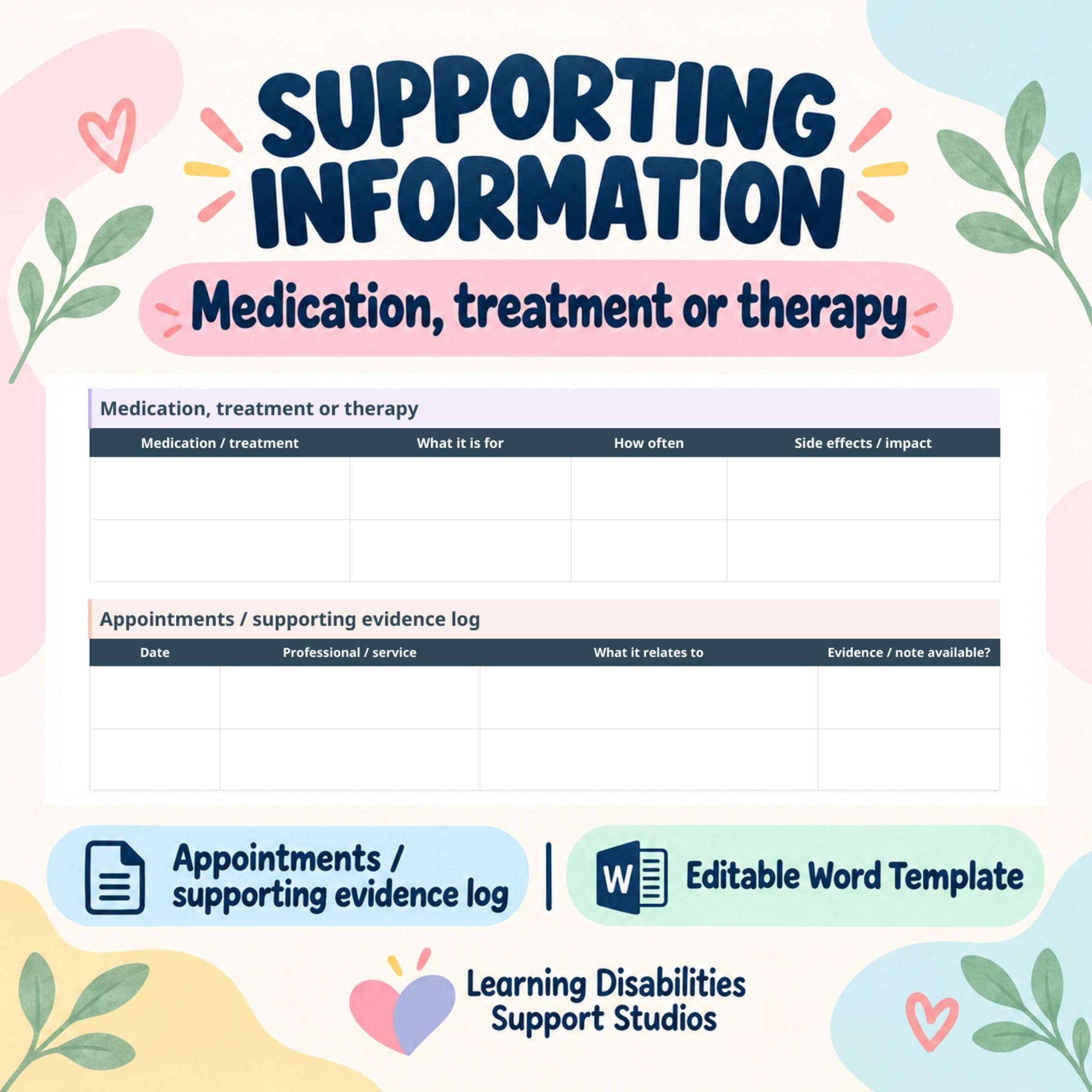
• A supporting information page for medication, treatment, appointments and examples.
Space to record what everyday life is like
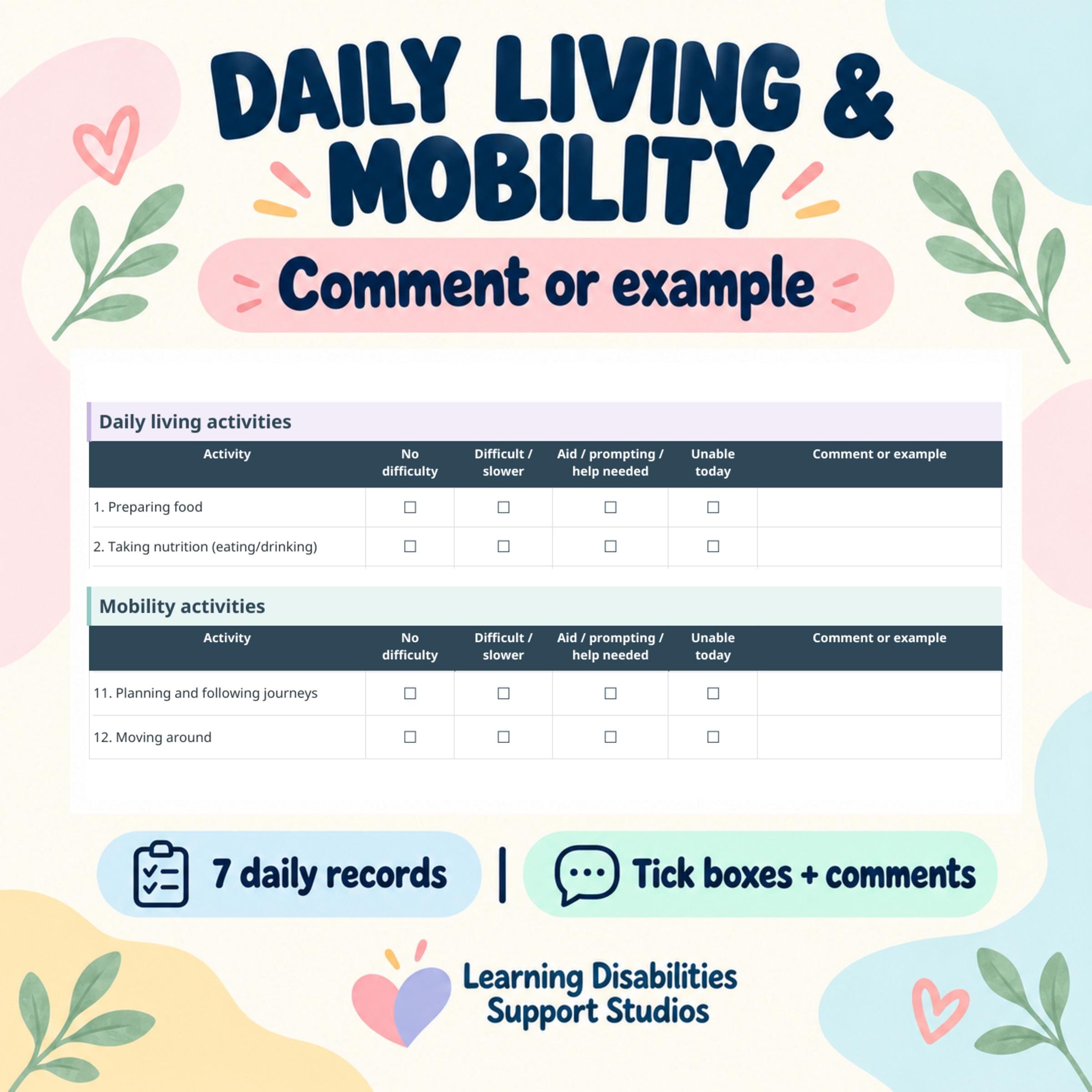
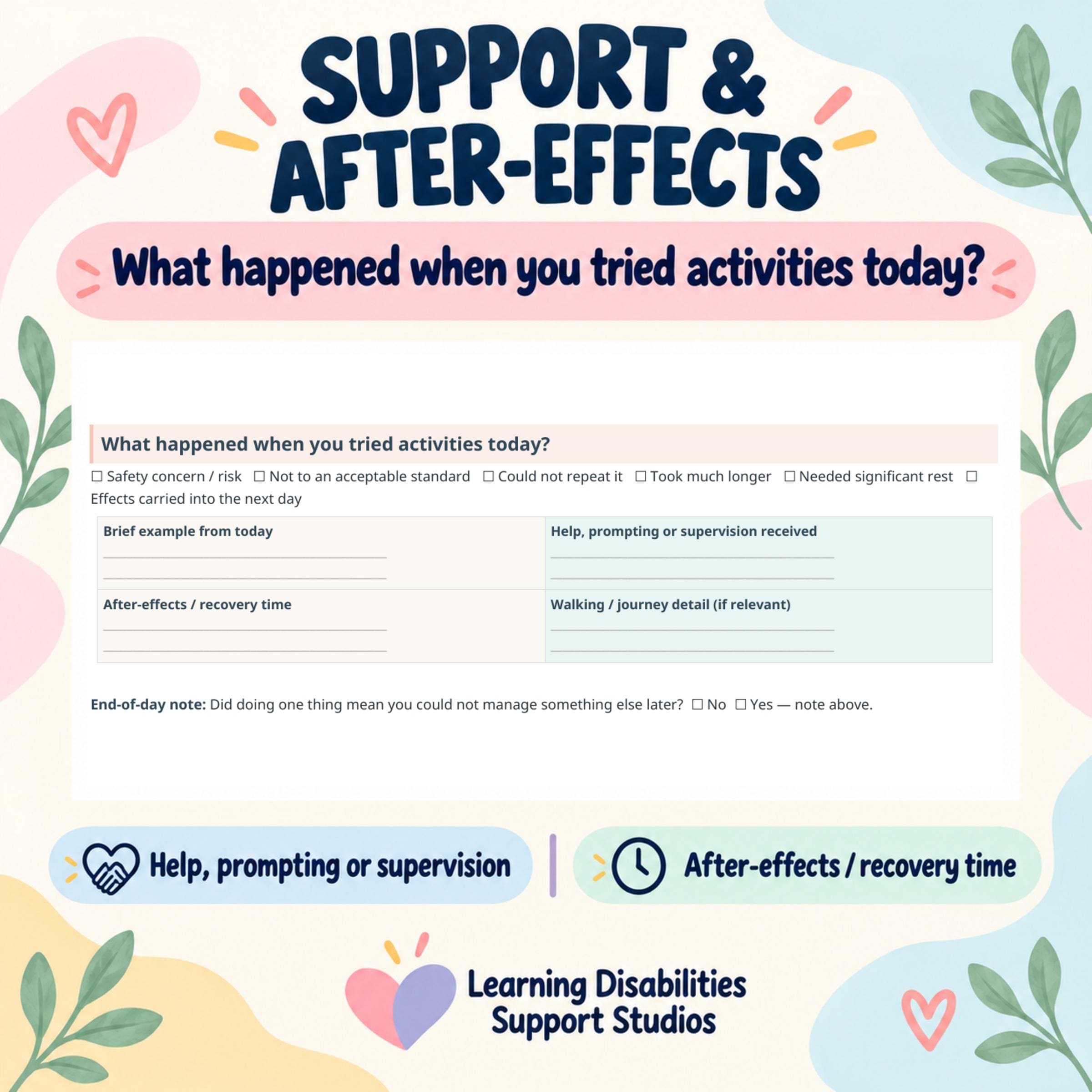
Each daily page includes your day pattern, main symptoms and a self-reported 0–10 pain rating. Daily living and mobility tables provide tick boxes and a comment or example space for each activity. There are prompts for help, prompting or supervision, safety concerns, extra time, rest and after-effects, including effects that carry into the next day.
The weekly summary brings the seven days together. The supporting information page helps you keep relevant treatment details and appointment or evidence notes in one place. The tracker does not calculate PIP points or make an eligibility decision.
Who may find it useful?
People preparing information about changing daily-living or mobility needs for PIP, and family members or carers helping them record their experiences. Complete it with the person wherever possible, using their own words and preferences. It is not only for people with learning disabilities.
Examples of fluctuating conditions
The recording prompts may be useful when symptoms or support needs vary with conditions such as:
• Fibromyalgia.
• Myalgic encephalomyelitis / chronic fatigue syndrome (ME/CFS).
• Long COVID.
• Rheumatoid arthritis or psoriatic arthritis.
• Lupus.
• Multiple sclerosis (MS).
• Migraine.
• Crohn’s disease or ulcerative colitis.
• Endometriosis.
• Postural tachycardia syndrome (PoTS).
• Hypermobile Ehlers–Danlos syndrome (hEDS).
This is a list of examples, not a list of conditions that qualify for PIP. Experiences vary within each condition. The tracker may also be useful with other long-term physical or mental health conditions if its prompts fit the person’s needs. It helps organise observations; it does not treat or assess any condition.
Keep a fair picture of the week
Record what actually happened on better as well as more difficult days. Include help you needed, even if it was not available, and explain delayed effects. Do not attempt an unsafe activity just to complete the diary.
Seven days is a snapshot, not the whole period considered for PIP. Note if the week was unusual and reuse the pages for another week if helpful. PIP considers the impact of difficulties over a longer period; a diagnosis or one difficult week alone does not establish entitlement. Seek individual welfare rights advice if you need help with a claim.
Important information
This is an independent information and organisation template, not an official DWP, NHS, council or professional assessment form. It is not approved or endorsed by those organisations. It does not provide medical, legal or welfare rights advice and cannot guarantee a benefit award.
It does not replace claim forms, professional advice, clinical records, prescribed care plans or emergency assistance. Pain ratings are personal observations, not a diagnosis or clinical assessment. Seek professional advice about new, worsening or concerning symptoms. For urgent medical help, use NHS 111 where available or your local urgent-care service; call 999 in an emergency. Do not delay seeking help to finish the tracker.
The template uses PIP terminology. Scotland uses Adult Disability Payment for new claims; check the benefit and process that apply where you live. This is not an official form for either benefit.
Format and instant download
A4 Microsoft Word (.docx) file. Type into the document or print it and write by hand. Microsoft Word is recommended and is not included. Layout may vary in other apps. The file is editable; it is not an app, automatic calculator or online form.
This is an instant digital download. No physical item will be posted. After payment is confirmed, access your file through Etsy’s download instructions.
Usage terms
For personal and family use. Reuse and print the template for your own needs. You may share a completed copy with professionals involved in your support or claim. Please do not resell, redistribute or share the blank or editable template, or include it in another product. Contact the shop for permission before organisation-wide or commercial use.
© 2026 Learning Disabilities Support Studios.
Digital downloads
Your files will be available to download once payment is confirmed.
Frequently Asked Questions
What will I receive?
You will receive the editable A4 Microsoft Word documents listed in the individual product description. They are supplied as an instant digital download. Nothing will be posted to you.
Do I need the newest version of Microsoft Word?
No. The files are supplied in .docx format and should open in versions of Microsoft Word that support this file type. Very old versions may occasionally display small formatting differences.
Can I edit and print the templates?
Yes. You can type directly into the documents, save your completed copies and print them when needed. Please check the page layout before printing, particularly after adding large amounts of text.
Can I use the files in Google Docs, Pages or another program?
The templates are created and checked in Microsoft Word. Other programs may open .docx files, but formatting can change, so compatibility and page layout cannot be guaranteed outside Microsoft Word.
Who are these resources for?
The resources are created primarily for parents and family carers supporting children, young people and adults with learning disabilities. Completed documents may also be shared with relevant health, education and social care professionals.
Are these official NHS or local authority forms?
No. These are independently created, person-centred templates from Learning Disabilities Support Studios. They are not official NHS, local authority, education or social care documents.
Do the templates replace professional advice or existing care plans?
No. The templates help organise and share information, but they do not replace clinical records, professional assessments, prescribed guidance, care plans, risk assessments or emergency advice.
What should I do if I have difficulty opening a file?
Please message me through Etsy and explain what is happening. I will be happy to help you check the download and resolve problems with the supplied files.