$11.06
Introductory launch price for a limited time
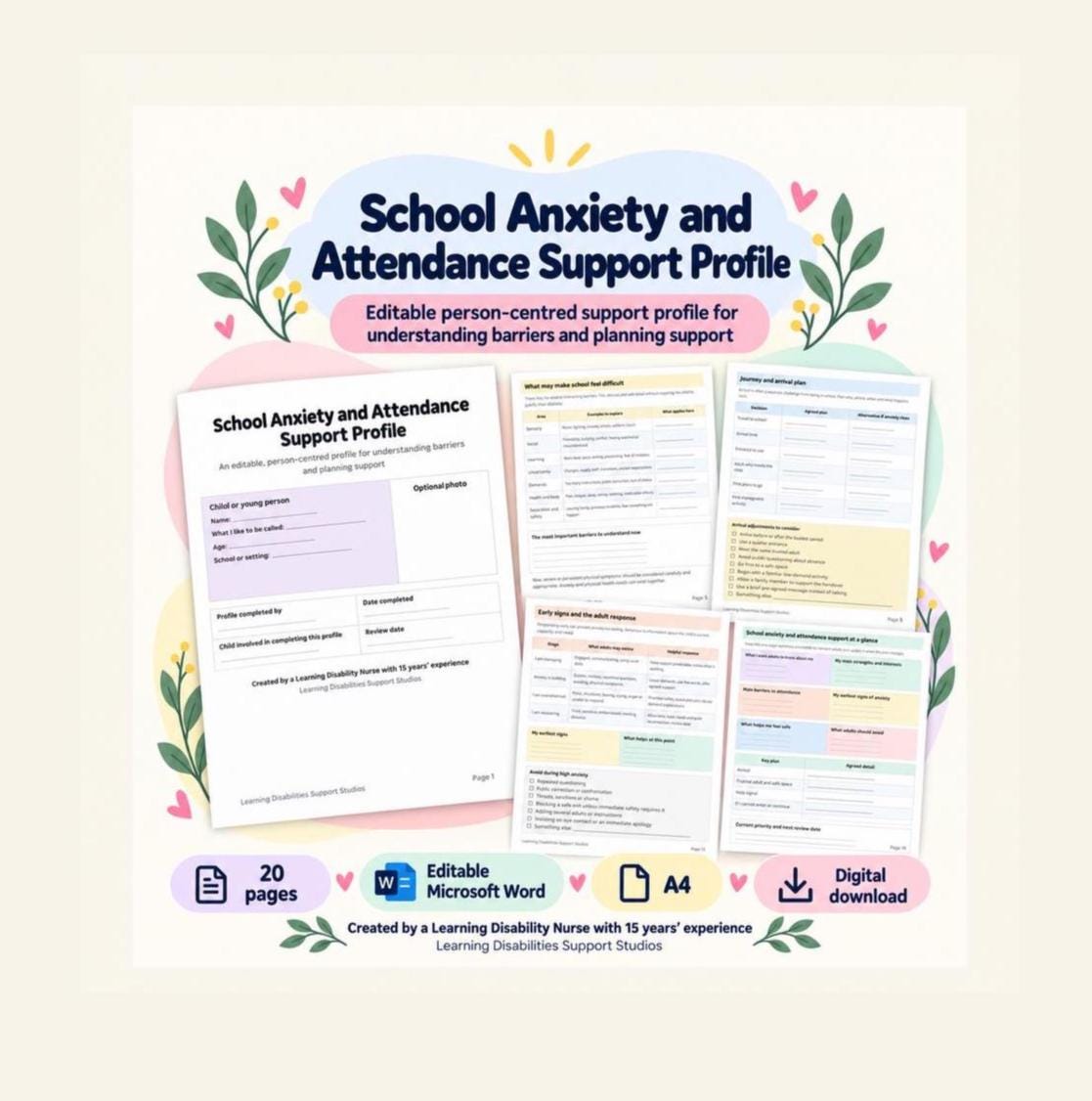
Understand what is making school attendance difficult and plan support around the individual child rather than treating distress as deliberate defiance.
This editable School Anxiety and Attendance Support Profile helps families, schools and professionals explore the barriers behind anxiety, absence, late arrival or difficulty remaining in school. It provides a clear structure for agreeing practical adjustments, predictable responses and manageable next steps.
The profile considers the whole child. It brings together strengths, communication, relationships, sensory needs, learning demands, health, uncertainty, previous experiences, morning pressures, travel, arrival, unstructured times and recovery after attendance.
It may be useful when a child or young person experiences school anxiety, emotionally based school avoidance or non-attendance, sometimes shortened to EBSA or EBSNA, or other barriers that affect their access to education.
This is not a reward chart or behaviour programme. It supports curiosity, genuine child involvement, reasonable adjustments and calm, consistent planning across home and school.
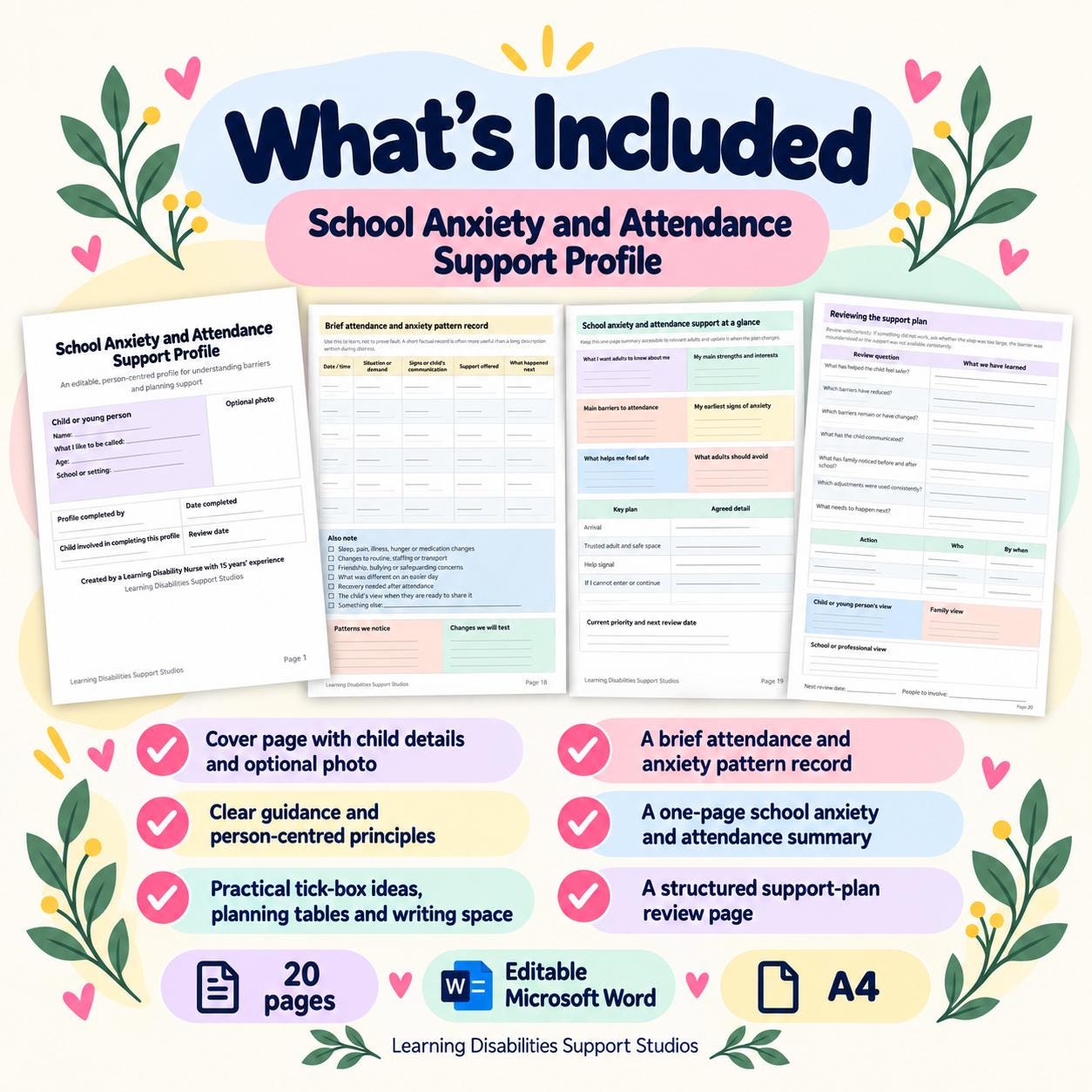
What is included
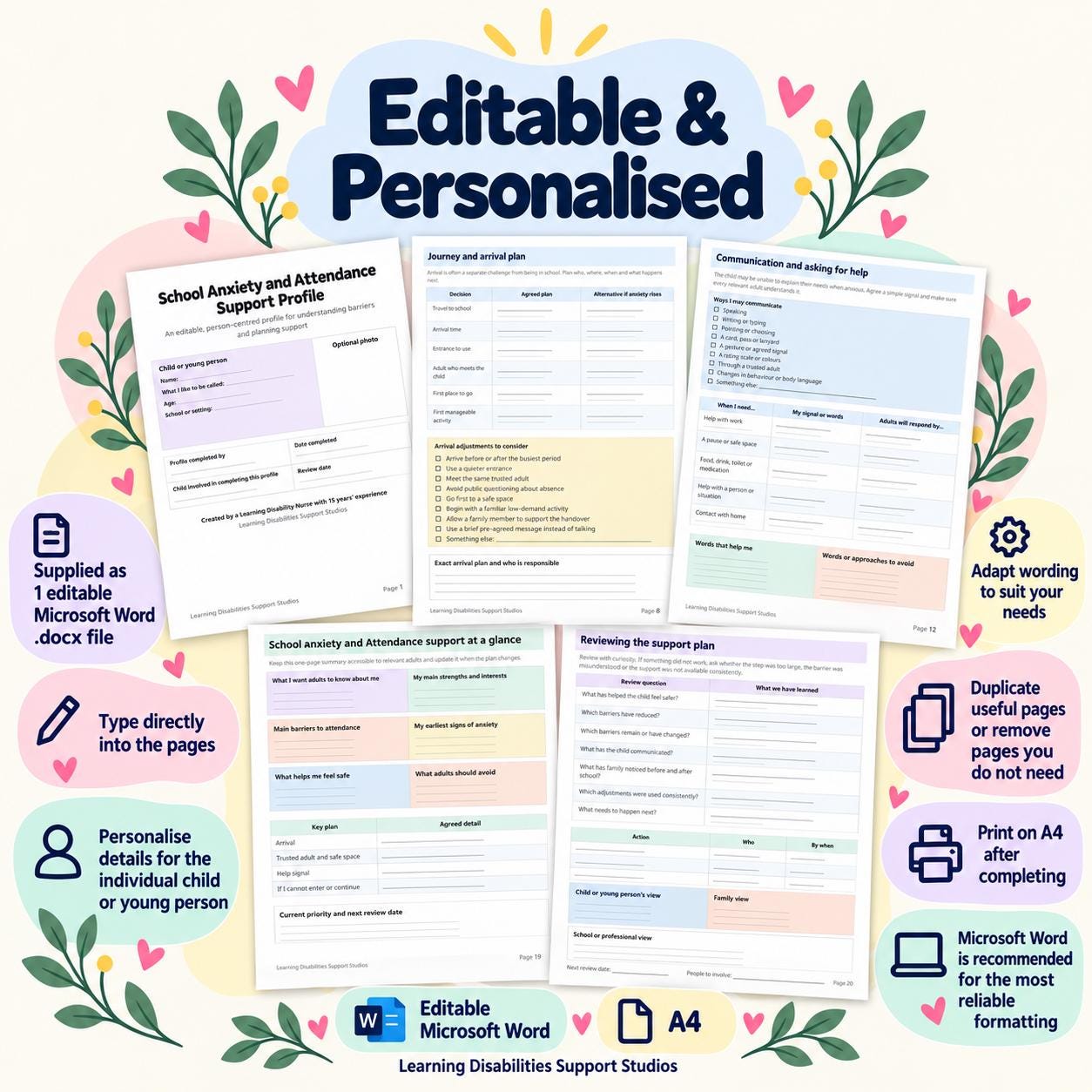
• One editable Microsoft Word document containing 20 designed A4 content pages
• Cover page with space for the child’s details and an optional photograph
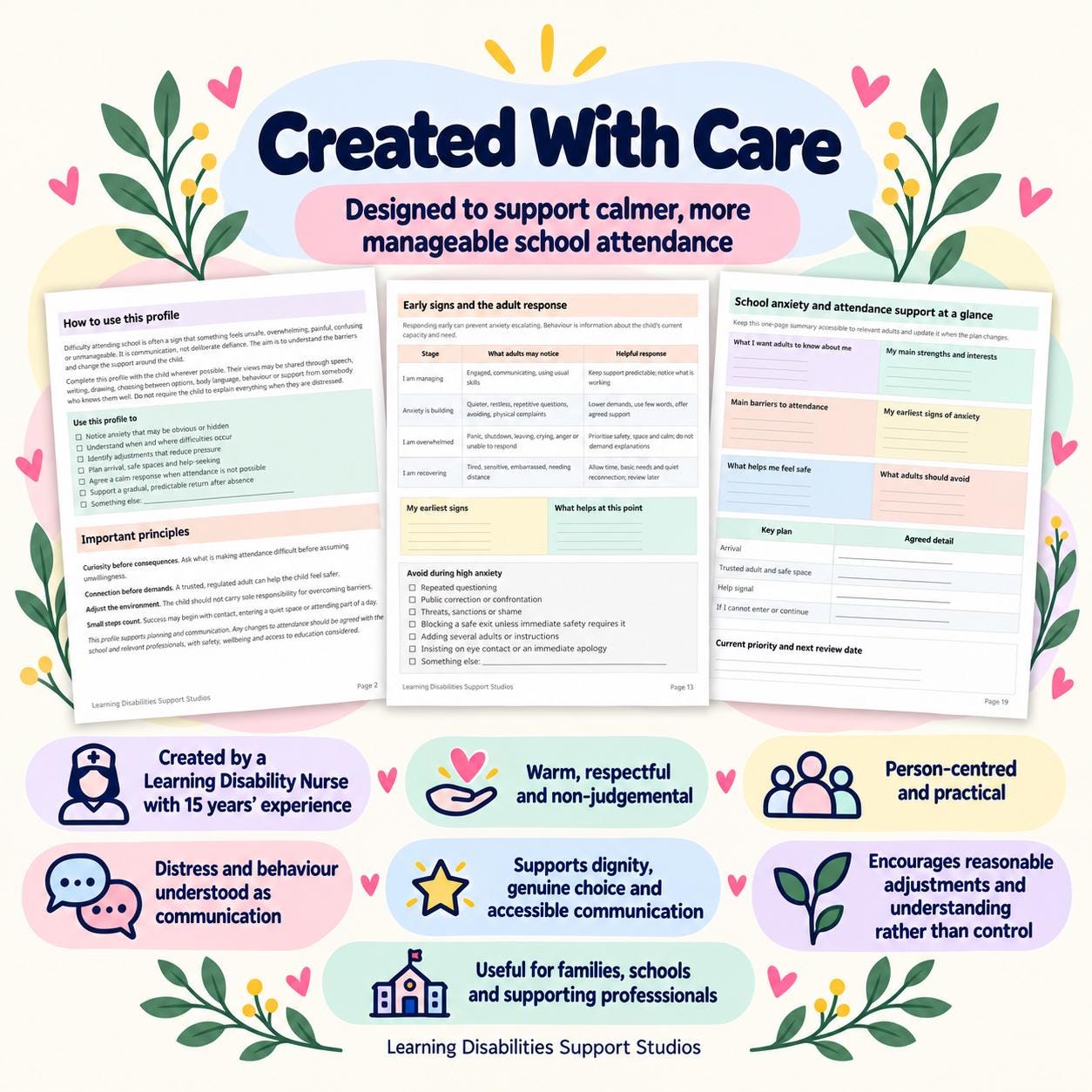
• Clear guidance and person-centred principles for families and supporting adults
• Practical tick-box ideas, planning tables and generous writing spaces
• A brief attendance and anxiety pattern record
• A one-page school anxiety and attendance summary
• A structured support-plan review page with actions and responsibilities
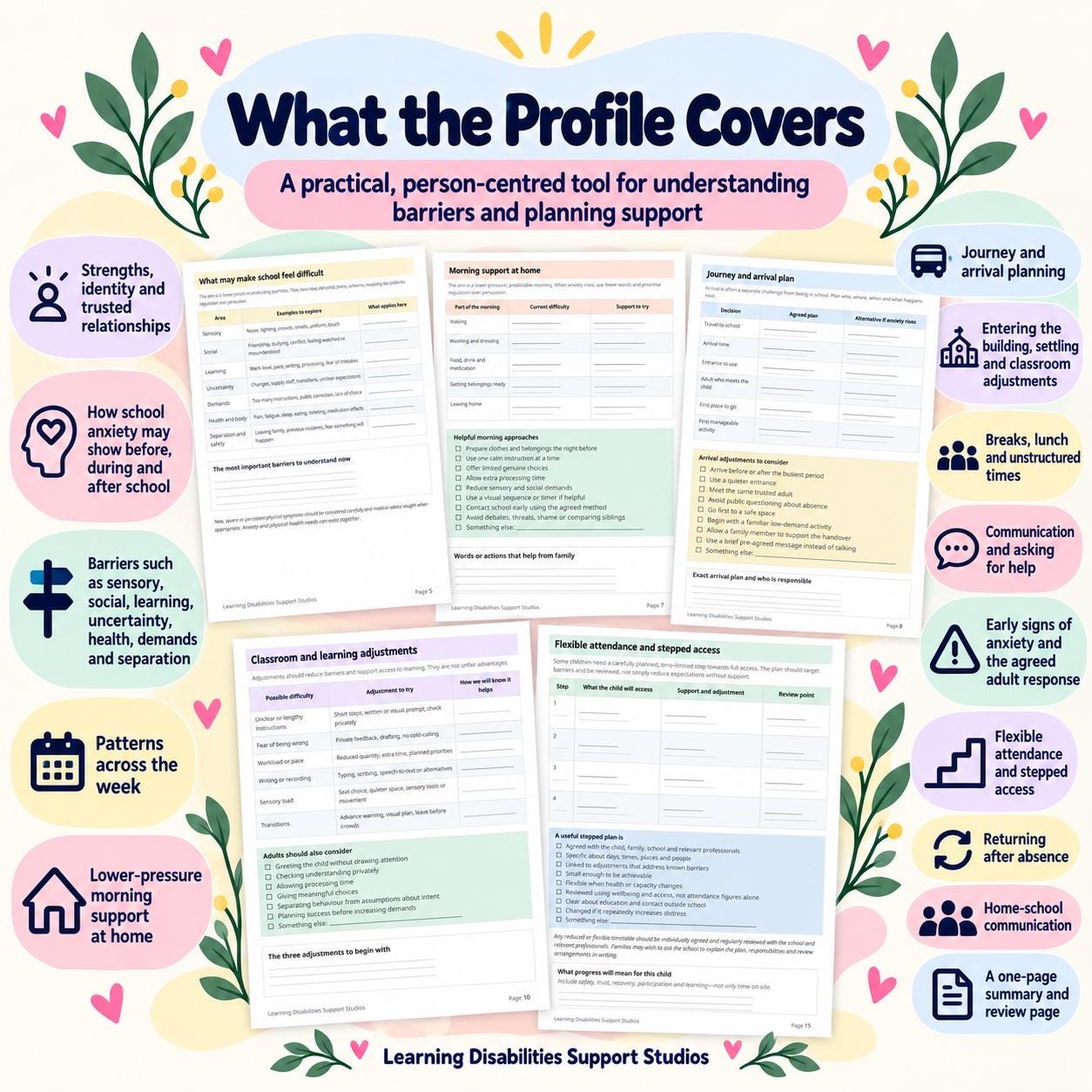
The profile covers
• The child’s strengths, interests, identity and trusted relationships
• How anxiety may appear differently before school, during school and afterwards
• Possible sensory, social, learning, uncertainty, demand, health, separation and safety barriers
• Patterns across the week, including mornings, journeys, lessons, breaks and recovery time
• Lower-pressure morning support at home
• A detailed journey and arrival plan with alternatives if anxiety rises
• Trusted adults, safe spaces and manageable steps for entering and settling
• Classroom and learning adjustments
• Support for breaks, lunch, corridors, toilets and other unstructured times
• Ways the child communicates and asks for help
• Early signs of rising anxiety and the agreed adult response
• What to do calmly when entering or continuing attendance is not possible
• Flexible attendance and stepped access, with clear review points
• A predictable return plan following absence
• Home-school communication, named contacts and information sharing
• A factual attendance and anxiety pattern record
• A one-page summary for relevant adults
• Review questions, agreed actions, responsibilities and timescales
Who this resource is for
• Parents and family carers supporting a child or young person who finds school attendance difficult
• Children and young people with autism, ADHD, learning disabilities, anxiety, sensory differences or other individual support needs
• SENCOs, teachers, teaching assistants, pastoral teams and attendance staff
• Health, education and social care professionals working alongside families
• Families and schools seeking one shared, person-centred plan rather than disconnected notes and conversations
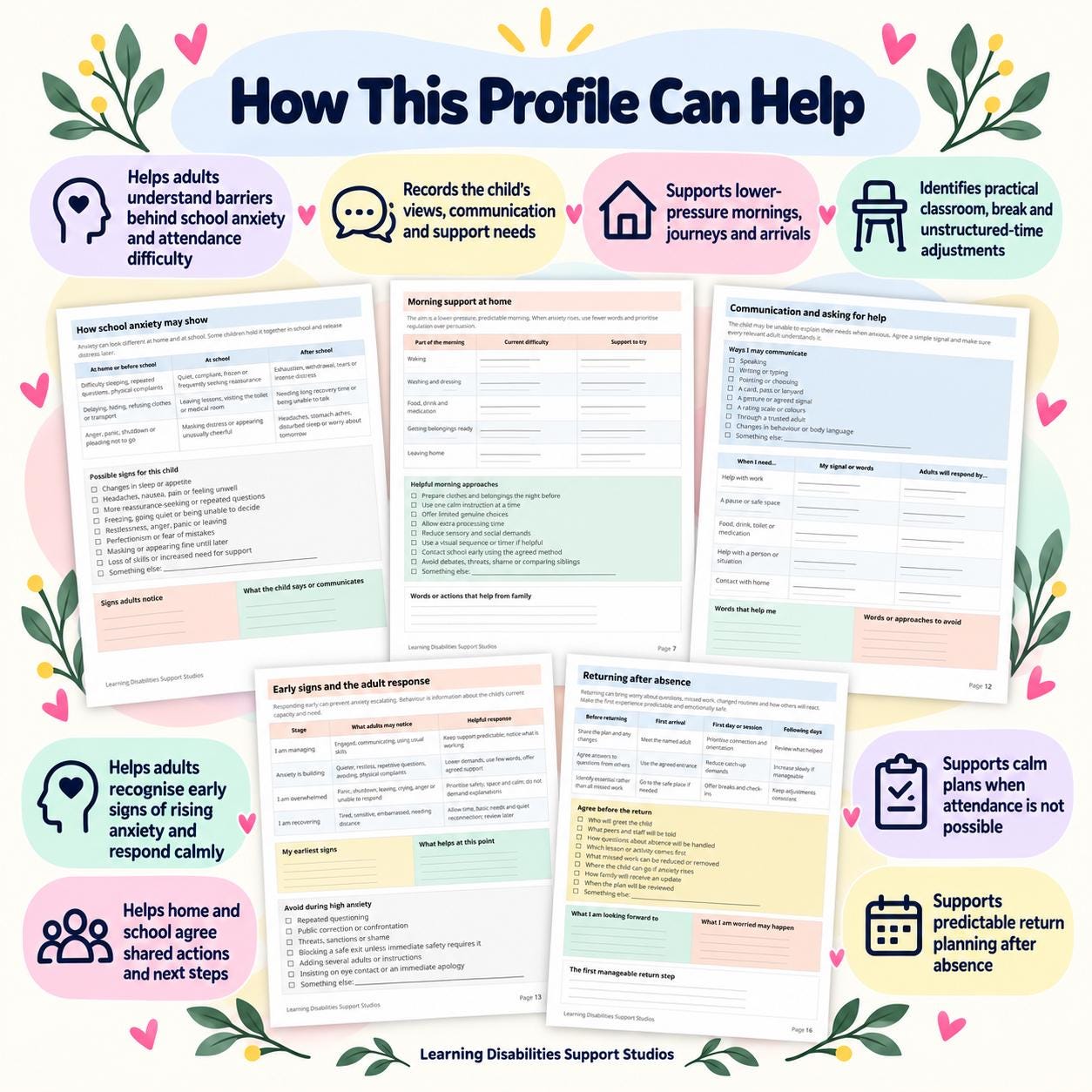
Why families and schools may find it helpful
• It helps adults look beyond attendance figures and understand the barriers affecting safety, wellbeing and access to learning.
• It records the child’s views and recognises speech, writing, drawing, choice, body language and behaviour as valid communication.
• It identifies adjustments for specific parts of the day instead of relying on general reassurance or pressure.
• It supports calm responses when attendance is not possible and protects the relationship needed for the next step.
• It gives home and school a shared structure for named actions, responsibilities and review dates.
• It considers progress through trust, recovery, participation and learning as well as time spent on site.
Format and editing
• You will receive one Microsoft Word file in .docx format.
• The document is fully editable, so you can type into the spaces, adapt the wording, duplicate useful pages and remove sections that are not needed.
• The pages are A4 and can be printed after completion. Microsoft Word is recommended for the most reliable formatting. Other compatible programs may display the layout slightly differently.
Professional and person-centred approach
• Created by a Learning Disability Nurse with 15 years’ experience.
• The profile uses warm, respectful and non-judgemental language. Difficulty and distress are treated as communication, with emphasis on dignity, genuine choice, accessible communication, reasonable adjustments and understanding rather than control.
Please note
• This is a digital download. No physical item will be posted.
• This profile supports planning and communication. It does not diagnose anxiety, autism, ADHD or any other condition, and it does not replace individual educational, medical, therapeutic, legal, attendance, safety or safeguarding advice.
• Any reduced or flexible timetable should be individually agreed and regularly reviewed with the school and relevant professionals.
• The document is supplied blank for the purchaser to personalise. No completed assessment, individual attendance decision or professional care plan is included.
Licence
• For the purchaser’s personal or professional use. You may complete and share an individualised copy with the child’s agreed support network. The blank template must not be resold, redistributed, shared as a blank resource or used to create a competing product.
Learning Disabilities Support Studios
Created by a Learning Disability Nurse with 15 years’ experience
© 2026 Learning Disabilities Support Studios.
Digital downloads
Your files will be available to download once payment is confirmed.
Frequently Asked Questions
What will I receive?
You will receive the editable A4 Microsoft Word documents listed in the individual product description. They are supplied as an instant digital download. Nothing will be posted to you.
Do I need the newest version of Microsoft Word?
No. The files are supplied in .docx format and should open in versions of Microsoft Word that support this file type. Very old versions may occasionally display small formatting differences.
Can I edit and print the templates?
Yes. You can type directly into the documents, save your completed copies and print them when needed. Please check the page layout before printing, particularly after adding large amounts of text.
Can I use the files in Google Docs, Pages or another program?
The templates are created and checked in Microsoft Word. Other programs may open .docx files, but formatting can change, so compatibility and page layout cannot be guaranteed outside Microsoft Word.
Who are these resources for?
The resources are created primarily for parents and family carers supporting children, young people and adults with learning disabilities. Completed documents may also be shared with relevant health, education and social care professionals.
Are these official NHS or local authority forms?
No. These are independently created, person-centred templates from Learning Disabilities Support Studios. They are not official NHS, local authority, education or social care documents.
Do the templates replace professional advice or existing care plans?
No. The templates help organise and share information, but they do not replace clinical records, professional assessments, prescribed guidance, care plans, risk assessments or emergency advice.
What should I do if I have difficulty opening a file?
Please message me through Etsy and explain what is happening. I will be happy to help you check the download and resolve problems with the supplied files.